Why Your Exterior Paint Quote Doesn’t Include Power Washing
I remember the first time I got a paint estimate for my home’s exterior. The contractor handed me a number, and I nodded, feeling good about the project. But as I looked over the quote, I noticed something odd—power washing wasn’t included. At the time, I brushed it off, thinking it was just an extra step I could handle myself. Turns out, missing that detail was a costly mistake, and I learned the hard way that power washing is essential before applying fresh paint.
The Hidden Cost of Overlooking Power Washing in Your Paint Project
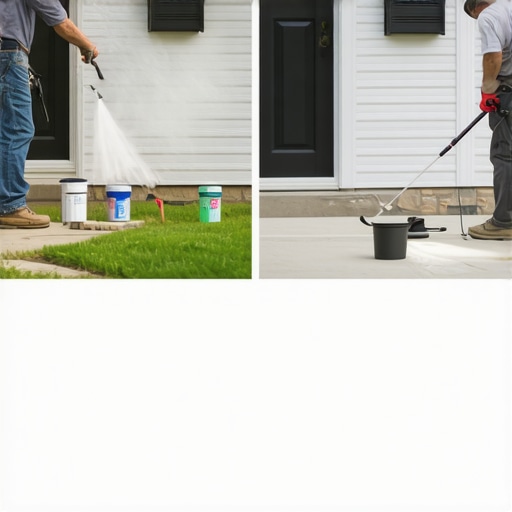
If you’re like most homeowners, you’re probably wondering why your quote doesn’t cover this crucial prep step. Power washing not only clears dirt and peeling paint—but it also creates the ideal surface for the new coat to stick. Skipping this step can lead to paint failure, peeling, and even the need for early repainting, which might cancel out any initial savings. I’ve seen countless projects where overlooked prep work resulted in avoidable costs down the line. Trust me, ensuring power washing is included can save you from premature repainting and maintain your curb appeal.
Is Power Washing Really Worth the Extra Cost?
I used to think power washing was optional, an add-on that could be pushed aside to save a few bucks. But early on, I made the mistake of assuming you could do it yourself or that rain would rinse away the dirt. The truth? Expert power washing makes all the difference—it’s a specialized process that gets rid of stubborn grime and algae, which standard cleaning might miss. According to industry experts, neglecting thorough surface prep can reduce paint lifespan by up to 50%, costing homeowners more in the long run (source). This realization pushed me to include it in every quote I seek now.
So, if you’re getting a paint estimate, ask explicitly whether power washing is part of the service. If not, be prepared to either do it yourself or pay extra later. But don’t wait until the project’s halfway done to realize! Let’s dive into how to make sure your quote covers all the essential prep work, starting with understanding what’s truly necessary for lasting results.
Get Precise Estimates: Break Down Every Step
When I tackled my first major renovation, I learned that granular detail lives at the core of accurate estimating. Start by listing every material, labor, and ancillary expense associated with your project. Use detailed resources like cost-effective estimating techniques to understand how to allocate costs properly.
Measure Twice, Calculate Once: Use the Right Tools
I recommend employing digital estimating software or spreadsheet templates that allow you to input real-time data. This approach minimizes errors that often occur with manual calculations. I once used a simple Excel sheet but switched to specialized tools after realizing how much I was overlooking, leading to underestimating costs by 15%. Combining different data sources, like supplier quotes and labor rates, ensures your estimate mirrors actual expenses. Learn how to estimate costs effectively for better budgeting.
Include a Contingency to Cover Surprises
No project goes perfectly, which is why I always add a contingency buffer—typically 10-15%. During a bathroom addition, unexpected plumbing issues arose, costing me extra. By having a reserve fund, I avoided delays and saved stress. This proactive step ensures your estimate accommodates unforeseen expenses without disrupting your project timeline.
Validate Your Estimates and Adjust as Needed
Regularly review and refine your estimates throughout the planning phase. I kept revising mine, seeking quotes from multiple suppliers and checking recent market price trends. Doing so helps prevent budget overruns. For comprehensive strategies, visit top estimating strategies.
Ensure Permits Are Factored into Your Budget
Estimating costs extends beyond materials and labor; permits are often overlooked. I once underestimated permit expenses, causing delays and unplanned expenses. To avoid this, familiarize yourself with permit requirements early on, referencing permit process essentials or consulting with local authorities. Incorporate these fees into your initial estimate to stay on track.
Keep Detailed Records and Be Ready to Negotiate
Throughout my project, meticulous documentation of quotes, receipts, and changes saved me from disputes and overcharges. When reviewing bids, compare line items carefully. Often, I’ve negotiated better terms by referencing detailed estimates and market data. For insights on negotiating, check negotiation tactics for construction.
Many homeowners and even seasoned builders often operate under misconceptions about permitting, estimating, and managing new builds or additions. A common myth is that permits are merely a bureaucratic hurdle, something to be rushed or sidestepped to save time and money. However, this oversimplification ignores the critical role permits play in ensuring safety, compliance, and long-term project viability. In my experience, rushing permit acquisition can lead to costly rework or legal issues down the line, as highlighted in this comprehensive guide. It’s essential to treat permits not as an obstacle but as a step integral to your project’s success.
What Do Most Overlook About Cost Estimates for Additions and Builds?
One nuanced mistake is underestimating the complexity of accurate cost estimation. Many believe that gathering a few quotes suffices, but in reality, true accuracy depends on detailed, structured estimating processes. Homeowners often overlook indirect costs like permits, utility upgrades, and soil testing, which can inflate budgets unexpectedly. Traditional methods may miss these subtleties, leading to budget overruns. For advanced projects, employing top estimating strategies is invaluable for precision.
Avoid These Common Estimating Pitfalls
One trap I’ve seen repeatedly is neglecting to include a contingency buffer—many omit this, assuming estimates will be exact. Yet, unforeseen conditions like hidden pests or structural issues can increase costs by 10-20%. Incorporating a contingency of 10-15% can save significant headaches. Also, relying solely on contractor quotes without cross-verification can hide markups or errors. Regularly checking the estimates against market data ensures your budget’s integrity. For more tips, see this detailed guide.
Why Incorrect Permitting Can Halt Your Project
One advanced mistake many overlook is the importance of understanding specific permit requirements—simply getting a general permit isn’t always enough. For instance, new building codes in 2025 may introduce restrictions on foundation depth or lateral load requirements. Failing to account for these can lead to project halts or re-approvals, which are both costly and delays. It’s prudent to stay updated by consulting this resource. A well-informed approach ensures you proactively address potential issues rather than react to permits denied mid-build.
> Make sure to verify all these nuances before starting your project; otherwise, your build might face avoidable setbacks. As always, thorough planning and expert advice are your best tools. Have you ever fallen into this trap? Let me know in the comments.
Keep It Going: Tools I Rely On for Construction and Estimating
Maintaining accuracy and efficiency throughout a project hinges on using the right equipment and software. Personally, I swear by Bluebeam Revu for document markup and collaboration. Its robust annotation features streamline communication with clients and subcontractors, ensuring everyone stays on the same page. For estimating, I prefer Buildertrend because it integrates scheduling, budgeting, and change orders in one platform, drastically reducing errors and oversights. I’ve found that switching from manual spreadsheets to these digital tools cut my estimation times in half and improved the accuracy of my budgets, especially when estimating complex additions or new builds. The future is leaning toward AI-powered project management software that can predict cost overruns before they happen, so staying updated with features like predictive analytics will be vital.
How do I maintain these tools to stay effective over time?
Regular updates and dedicated training are essential. Software like Bluebeam or Buildertrend often releases new features annually—investing a few hours in webinars or tutorials ensures you’re leveraging their full potential. For physical tools, routine calibration of measuring devices and cleaning equipment after each project keeps your gear running smoothly and prevents costly downtime. A well-maintained toolbox isn’t just about longevity; it directly impacts your project quality and scheduling.
Moreover, implementing a scheduled maintenance routine for your digital tools can prevent data loss or glitches. Back up your project files weekly, and ensure your software licenses are current, so you’re not caught off guard. Additionally, document your processes for updates and troubleshooting; this creates an internal knowledge base that new team members can quickly learn from, maintaining consistency across projects.
Embracing Technology for Long-Term Results
As technology evolves, so does our capacity to deliver better projects faster and with fewer errors. AI-driven estimating tools, predictive scheduling, and real-time permit tracking are becoming industry standards. To stay ahead, I recommend dedicating time each month to explore new features or alternative platforms that could integrate seamlessly into your workflow. Doing this can prevent your operation from falling behind and help you scale efficiently.
Start by trying out an advanced feature in your current project management software—such as automated budget alerts when approaching a threshold. This proactive approach keeps your project within scope and budget, reducing stress and post-project surprises. Understanding these strategies can give you a huge edge.
What I Didn’t Know About Permit and Project Estimating Until It Was Too Late
One of the most profound lessons I learned was that permitting isn’t just a bureaucratic step but a safeguard ensuring your project’s longevity and compliance. Overlooking this can lead to costly delays or legal hurdles. Equally, I discovered that accurate estimating isn’t about quick guesses but a disciplined process involving detailed breakdowns and contingency planning. Missing these nuances has taught me to approach every project with a mindset of thorough preparation.
Curated Resources to Elevate Your Construction Planning
For practical tools, I rely on top estimating strategies that help me refine my budgets with precision, ensuring I account for every cost. When it comes to permits, streamlining your permit process has saved me countless hours and headaches. Additionally, comprehending local permit requirements through this in-depth guide keeps my projects compliant and on track. For project management, tools like expert home additions insights help me coordinate efficiently and avoid surprises.
Your Next Step Starts Here—With Confidence
embracing these lessons and tools transforms how you approach permit, estimating, and project execution. The more you invest in understanding the intricacies, the less you’ll worry about delays or budget overruns. Remember, every successful project begins with informed planning—don’t let oversight hold you back. Now, it’s your turn—what unexpected challenge caught you off guard during your recent project? Share below and let’s learn from each other’s experiences.