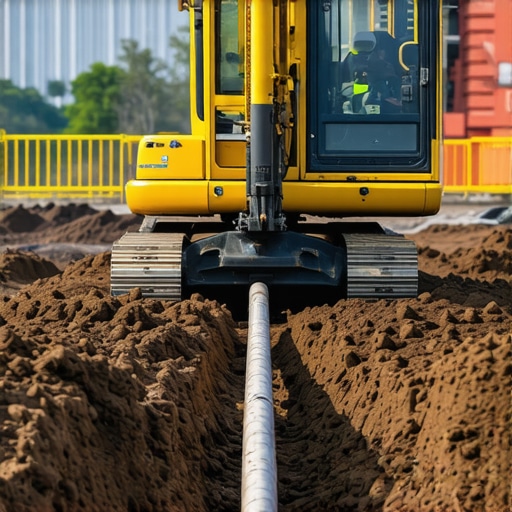
Why Most Emergency Sewer Line Repair Quotes Ignore Restoration Costs
Why Most Emergency Sewer Line Repair Quotes Ignore Restoration Costs
It is 2:00 AM, and you are standing in your basement in two inches of foul-smelling water. The panic is real, the smell is overwhelming, and your first instinct is to call the first “24/7 emergency plumber” you find on Google. They arrive, diagnose a collapsed main line, and hand you a quote for $6,500. In that moment of crisis, you sign the paperwork, thinking that $6,500 is the price to return your life to normal. However, as an excavation and site restoration specialist with over 20 years in the field, I, Curtis Zimmer, have seen this scenario play out hundreds of times. That $6,500 quote usually only covers “the pipe.” It does not cover the mountain of displaced clay in your front yard, your ruined driveway, or the $4,000 in landscaping you’ll need next month. When it comes to emergency sewer line repair, the plumbing fix is often only half the total project cost.
The discrepancy between a plumbing quote and the final reality of property restoration is the single biggest source of “sticker shock” in the residential construction industry. Homeowners often feel misled, but the reality is often found in the fine print of the contract’s “Scope of Work.” To navigate a sewer crisis without financial ruin, you must understand where the plumber’s job ends and where the restoration specialist’s job begins. This guide will break down the hidden costs of excavation, the physics of soil settlement, and why the cheapest emergency quote is often the most expensive mistake a homeowner can make.
The “Plumber’s Scope” vs. The “Property Owner’s Reality”
Plumbers are masters of hydraulics and pipe fitting. They are the heroes who stop the leak and ensure your home’s waste reaches the municipal main. However, most plumbing companies are not excavation or landscaping firms. Their equipment – often a small mini-excavator or a backhoe – is designed for one thing: getting to the pipe as quickly as possible. Once the pipe is replaced and the municipal inspector signs off, the plumber’s primary goal is to “backfill to rough grade.”
Rough grade is a technical term that homeowners often misunderstand. In the world of excavation services, rough grade means the dirt is pushed back into the hole, often left in a large mound (to account for future settling) or loosely packed. Plumbers rarely have the equipment or the billable hours in their quote to perform structural compaction or site stabilization. They leave behind a landscape that looks like a battlefield, often with heavy tread marks across your lawn and oil stains on your pavers. The “Property Owner’s Reality” is that once the plumber leaves, you are left with a site that is legally “repaired” but functionally destroyed. This is why it is critical to calculate realistic contingency funds for a new build or a major repair before the first shovel hits the ground.
The Hidden Costs of Traditional Excavation
When performing a traditional emergency sewer line repair, the physical impact on the property is massive. A sewer line is typically buried 4 to 10 feet deep. To reach that depth safely, OSHA regulations often require the trench to be widened or “benched” to prevent cave-ins. This means a 2-foot wide pipe repair can result in a 6-foot wide scar across your property.
Soil Compaction and Structural Integrity
One of the most ignored costs is the restoration of soil structure. When soil is excavated, it “bulks” – it occupies more volume than it did when it was compacted underground. If a contractor simply pushes this bulked soil back into the trench, it will inevitably sink over the next 12 to 24 months as rain and gravity take hold. This settlement doesn’t just ruin your grass; it can cause “point loading” on the new pipe. If the soil settles unevenly, it can put immense pressure on the joints of the new line. This is why understanding the specific type of pipe bedding required for sewer lines is so important. Without proper bedding and mechanical compaction in 6-inch “lifts,” the new pipe can “bell” (sag) or even crack, leading to a secondary failure within a few years.
Hardscape and Utility Collateral Damage
Sewer lines rarely run under a perfectly clear patch of grass. They often run under driveways, sidewalks, or expensive retaining walls. Most emergency plumbing quotes explicitly exclude “hardscape restoration.” If they have to cut through your asphalt driveway to reach the line, they will backfill the hole with gravel, but the cost of professional repaving is entirely on you. Furthermore, the vibration from heavy machinery during an emergency dig can occasionally disturb adjacent utility lines. I always advise homeowners to check how to verify your contractor’s liability insurance for new builds and repairs to ensure they are covered if a gas or water line is nicked during the process.
Why Restoration is a Separate Professional Discipline
True restoration is an art and a science that begins where the plumbing ends. It involves more than just throwing down some grass seed. Depending on the location of the repair, you may need land clearing services if the sewer line was obstructed by mature trees or heavy brush. Removing a tree to access a sewer line isn’t just about the chainsaw work; it’s about stump grinding and ensuring the root system won’t interfere with the new pipe.
Furthermore, if your property relies on a septic system rather than a municipal tie-in, the stakes are even higher. A botched excavation near a tank can lead to the need for a full septic tank installation if the structural integrity of the old tank is compromised by heavy equipment weight. Professional restoration specialists look at the “drainage signature” of the entire lot. If the excavation changes the slope of your yard, you might find that your next heavy rain sends water toward your foundation instead of the street. This is a primary reason why your landscape plan needs a registered drainage signature, even for what seems like a simple repair.
In many cases, the restoration specialist will need to bring in “structural fill” or topsoil that matches the existing soil’s percolation rate. This is especially true if you are performing septic system maintenance or repair, where the health of the soil directly impacts the system’s ability to process effluent.
Trenchless vs. Traditional: The Restoration Math
In the modern era of emergency sewer line repair, homeowners often have the choice between traditional “dig and replace” and trenchless technologies like pipe bursting or epoxy lining. At first glance, a trenchless quote might look 30% to 50% higher than a traditional dig quote. However, when you factor in the “Second Bill” (the restoration cost), trenchless is almost always the cheaper option.
A traditional dig might cost $5,000 for the plumbing and $4,000 for driveway repair, sod, and soil stabilization. A trenchless repair might cost $7,500 but requires only two small access pits, leaving your landscaping and driveway 95% intact. If your sewer line runs near your septic field, traditional digging can be even more disastrous. I have seen countless cases where a plumber’s heavy excavator compacted the soil over a leach field, necessitating an expensive septic drain field repair that could have been avoided. This is why we emphasize the soil compaction rule that ruins new septic drain fields – once that soil is smashed down by a 10-ton machine, its ability to filter water is gone forever.
Regulatory Hurdles: Permits and Inspections
Another “hidden” aspect of the repair process is the regulatory requirement. You cannot simply fix a pipe and bury it. In almost every jurisdiction, a municipal inspector must view the new pipe, the bedding, and the connections before the trench is closed. If a plumber rushes the job to get to their next emergency call, they might “pre-fill” parts of the trench, which an inspector may then force them to re-excavate at your expense.
There are also specific rules about what can and cannot be changed during an emergency repair. For instance, many homeowners want to add a basement bathroom while the floor is already torn up. However, this triggers the sewer backflow valve rule for new basement baths, which can add significant cost to the plumbing side of the ledger. Similarly, if you are replacing the main trap, you must be aware of the permit requirement for replacing a main sewer trap. Failing to secure these permits can result in fines and, more importantly, issues when you eventually try to sell your home and the title search reveals unpermitted “emergency” work.
How to Vet an Emergency Quote (The Checklist)
When you are staring at a flooded basement and a contractor is handing you a pen, take sixty seconds to ask these four questions. If the answer to any of these is “no” or “that’s extra,” you need to adjust your budget immediately.
- “Does this quote include the hauling of excess spoils?” (Excavated dirt often cannot all fit back into the hole once the pipe and new bedding are in. If they leave a “dirt mountain,” you will have to pay someone like me to haul it away later.)
- “What is your compaction process?” (If they say “we just drive over it with the backhoe,” your yard will sink. Look for contractors who use jumping jacks or vibratory plate compactors in 6-inch lifts.)
- “Are you licensed for commercial land clearing or residential restoration?” (Many plumbers have a “plumbing only” license. If they are doing major earthmoving, they may be operating outside their licensed scope, which can void your homeowner’s insurance.)
- “Who is responsible for the ‘Finished Grade’?” (Ensure you know if they are leaving you with bare dirt or if they are bringing in screened topsoil and seed.)
If you are dealing with a larger property or a complex system, you might even need to look for excavation contractors near me who specialize in septic tank replacement. These specialists understand that the “system” doesn’t end at the pipe; it includes the soil, the slope, and the vegetation surrounding the site.
The Technical Reality of Settlement and Failure
From my perspective as a site specialist, the biggest tragedy isn’t the ruined grass – it’s the premature failure of the new repair. When a plumber backfills a 10-foot deep trench without proper compaction, the soil remains “loose.” Over the next year, water infiltrates this loose soil. This water doesn’t just sit there; it creates a “path of least resistance” along the outside of your new pipe. This can lead to soil erosion under the pipe, causing it to lose its pitch. If a sewer line loses its 1/4-inch-per-foot slope, solids will begin to collect, leading to another blockage and another “emergency” call within 24 months. By ignoring the restoration and compaction side of the quote, you aren’t just saving money on grass; you are gambling on the lifespan of the pipe itself.
Conclusion: Planning for the “Second Bill”
An emergency sewer line repair is a high-stress event, but it doesn’t have to be a financial catastrophe if you go in with your eyes open. Understand that the plumber is there to restore your *service*, while a restoration and excavation specialist is there to restore your *property*. The cheapest quote you receive will almost certainly be the one that ignores the restoration costs, leaving you to deal with sinking soil, cracked pavement, and dead landscaping on your own.
Before you sign that emergency contract, ask about the backfill method, the bedding, and the plan for excess dirt. If the plumber can’t provide a clear answer, call an excavation specialist to consult on the backfill phase. It is far cheaper to do the job right once than to pay for a plumbing fix today and a total yard reconstruction next year. Remember, a sewer line is only as good as the ground it’s buried in. Protect your investment by looking beyond the pipe and considering the total cost of the project.