Why Your 20-Yard Dumpster Rental in Branson West Might Hit You with Hidden Tonnage Fees
Why Your 20-Yard Dumpster Rental in Branson West Might Hit You with Hidden Tonnage Fees
It is a scenario I have seen play out countless times over my two decades in the Missouri solid waste industry: A homeowner in the Ozarks decides to finally tackle that basement cleanout or kitchen remodel. They do their research, find a competitive quote for a 20 yard dumpster rental, and set to work. The project goes smoothly, the bin is hauled away, and then – the “sticker shock” hits. Two weeks later, an invoice arrives with a “tonnage overage” fee that adds $150 or even $300 to the original price.
My name is Patty Overman, and as the Executive for the Region M Waste Management District, I’ve spent since 2003 navigating the complexities of recycling markets and solid waste management in Missouri. I’ve seen the “Tonnage Trap” catch even the most meticulous DIYers and contractors. When you are looking for a Branson West waste solution, understanding the difference between volume and weight is the only way to protect your budget. In this guide, I’ll pull back the curtain on how the waste industry operates in our corner of the Ozarks and how you can avoid these hidden costs.
Understanding the 20-Yard Dumpster: Volume vs. Weight
The most common misconception in the waste industry is that the size of the container dictates the cost of the disposal. While size is a factor, it is only half of the equation. A 20 yard dumpster rental refers specifically to volume – the amount of space inside the container measured in cubic yards. To visualize this, a 20-yard container typically holds about 110 to 130 standard 33-gallon trash bags. It is the “Goldilocks” size for many residential projects, providing enough room for bulky furniture, floorboards, and general debris without taking up the entire driveway.
However, landfills do not charge dumpster companies by the yard; they charge by the ton. This is known as a “tipping fee.” When you secure a waste container rental, your quote usually includes a “weight allowance.” For a 20-yard bin, this allowance is typically capped at 2 to 4 tons. If your debris consists of lightweight items like old mattresses and cardboard, you’ll likely stay under that limit. But if you are disposing of dense materials, you can hit that 4-ton ceiling long before the dumpster is physically full. This is where the hidden fees begin.
The Branson West Context: Local Disposal Realities
Operating in the Ozarks presents unique logistical challenges that affect your bottom line. In areas like Branson West, Reeds Spring, and Kimberling City, the distance to the nearest regional landfill or transfer station plays a massive role in pricing. National dumpster brokers often list “flat rates” online that don’t account for the steep grades of our hills or the specific tipping fees at Missouri-regulated facilities.
This is why working with a local lakeland dumpster rental service is critical. Local providers understand the regional infrastructure and are generally more transparent about the weight limits necessitated by local transport regulations. In Region M, we emphasize waste diversion and recycling, and heavy, mixed-load hauls increase the carbon footprint of transport, which is why accurate weight estimation is both a financial and environmental necessity.
Common Culprits: What Actually Weighs Down Your Dumpster?
If you want to avoid tonnage fees, you must know which materials are “weight-dense.” Most homeowners underestimate the mass of standard building materials.
Construction Debris
When performing a construction dumpster rental, materials like drywall, wet lumber, and roofing shingles are the primary offenders. Drywall is deceptively heavy; a single 4×8 sheet of half-inch drywall weighs nearly 50 pounds. If you are gutting a room, those sheets add up to a ton faster than you’d think. Before you start, it’s wise to learn How to Accurately Estimate Costs for Home Improvements to ensure your dumpster budget matches your project’s scale.
The “Heavy Fill” Rule
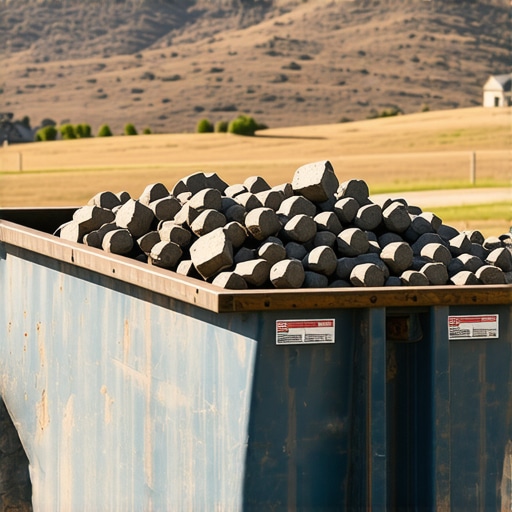
There is a strict industry rule: Never put “heavy fill” in a 20-yard dumpster. Heavy fill includes concrete, brick, asphalt, dirt, and rock. These materials weigh approximately 3,000 pounds (1.5 tons) per cubic yard. If you filled a 20-yard dumpster with dirt, it would weigh 30 tons – far exceeding the legal hauling limit of any truck. For these materials, you should always opt for a 10 yard dumpster specifically designed for heavy loads. Furthermore, if you are working on a new build, ensure your site has a designated concrete washout to prevent environmental contamination and additional cleanup fees.
The Rain Factor
In the Branson West area, we are no strangers to sudden Ozark thunderstorms. If you have a trash dumpster rental sitting open in your driveway during a downpour, materials like old carpeting, insulation, and wood will soak up water like a sponge. Water weight can add hundreds, if not thousands, of pounds to your load. Always keep a tarp over your dumpster if rain is in the forecast.
How to Estimate Your Project Weight Like a Pro
You don’t need a degree in physics to estimate your project’s weight. Use this “cheat sheet” to gauge whether your 20-yard bin is at risk of an overage:
- Roofing Shingles: One “square” (100 square feet) of 3-tab shingles weighs about 250 lbs. If you are stripping a 20-square roof, that is 5,000 lbs (2.5 tons) just in shingles.
- Drywall: As mentioned, 1 sheet (1/2 inch) = ~50 lbs. A standard room gut might involve 30-40 sheets, totaling 1 ton.
- Hardwood Flooring: 1 square foot of 3/4-inch oak flooring weighs about 2.8 lbs. A 500-square-foot room is roughly 1,400 lbs.
- Household Junk: On average, mixed household junk weighs about 150 lbs per cubic yard. A full 20-yarder of furniture and boxes would be roughly 1.5 tons.
Before you even order the bin, you should also check The Street Occupancy Permit Rule for Dumpster Placement in your local municipality, as placement can sometimes affect how efficiently you can load the bin to distribute weight.
3 Mistakes That Lead to Extra Fees
Beyond simply putting too much in the bin, how you load it can impact your final bill. Based on my experience with the ozark dumpster service landscape, here are three common errors:
- Mixing Materials Inefficiently: Many people throw heavy debris like broken tile or concrete chunks at the bottom and then pile light trash on top. If the driver suspects the load is over-weight due to the “heavy fill” at the bottom, they may take it straight to the scale, where you’ll be hit with the full fee.
- Overfilling (The “Max Fill” Line): Loading debris past the top rim of the dumpster is a major safety hazard. Drivers are legally required to tarp their loads. If they can’t tarp it, they won’t haul it, leading to “dry run” fees where you pay for the trip even if the dumpster stays put.
- Ignoring the “Pro-Rated” Overage: Many same day dumpster rental contracts have strict weight limits. Even if you are only 100 lbs over your 2-ton limit, some national companies will charge you for a full additional ton. Always ask if overages are pro-rated.
Choosing the Right Size: Is a 15-Yard or 20-Yard Better?
Sometimes, the best way to avoid a 20-yard tonnage fee is to not rent a 20-yarder at all. If you are doing a heavy remodel (like a bathroom with lots of tile), a 15 yard dumpster rental might be the smarter play. Why? Some companies offer a higher weight-to-volume ratio on smaller bins. A 15-yard bin with a 3-ton limit is often safer for heavy debris than a 20-yard bin with a 2-ton limit. Always compare the tonnage allowance, not just the physical size.
If you are a contractor, you should also ensure you are protecting yourself legally by knowing How to Verify Your Contractor’s Liability Insurance for New Builds, as dumpster mishaps (like driveway damage from an overweight bin) can lead to complex insurance claims.
Conclusion & Final Checklist
Navigating waste management in Branson West doesn’t have to be a gamble. The “hidden” fees are usually just the result of a disconnect between what a customer thinks they are buying (space) and what the landfill is selling (weight). To ensure a stress-free rental, follow this checklist:
- Ask for a “Weight-Included” quote and clarify exactly how many tons are in that allowance.
- Keep heavy materials (dirt/concrete) out of large-volume bins.
- Tarp your dumpster during Ozark rainstorms.
- Work with a local provider like lakeland dumpster rental who knows the local tipping fees.
Ready to start your project without the fear of hidden fees? Contact the ozark dumpster service experts at Lakeland for a transparent, professional quote that keeps your project on track and on budget.