The Specific Soil Type That Causes Long Island Egress Windows to Leak After Installation
The Specific Soil Type That Causes Long Island Egress Windows to Leak After Installation
Imagine this: You’ve finally finished your basement renovation. You’ve invested thousands of dollars in a high-end basement egress window installation to bring in natural light and ensure your family’s safety. Then, the first major Long Island nor’easter hits. You walk downstairs, expecting to see a cozy new living space, only to find a literal waterfall cascading over your new window sill. The window isn’t broken, and the glass is intact, yet the room is flooding. This is the nightmare scenario for many homeowners in Nassau and Suffolk Counties.
As the leader of the team at Construction Edgez, I, Nick Scaldino, have seen this happen more times than I can count. When homeowners call us to fix a leaking egress, they often blame the window manufacturer or the egress window contractors who performed the work. While poor craftsmanship is sometimes the culprit, the real “silent saboteur” is usually much deeper underground. It is the very earth that surrounds your home. Specifically, it is the Clay-heavy Glacial Till that defines much of Long Island’s unique geology.
In this comprehensive guide, we will dive deep into why your soil is the primary reason for egress failure and how professional Long Island egress window installers must adapt their techniques to the local landscape to prevent basement flooding.
The Geology of Long Island: Not All Dirt is Created Equal
To understand why a Long Island egress window installation fails, you first have to understand what lies beneath your lawn. Long Island was formed by the retreat of the Wisconsin Ice Sheet approximately 20,000 years ago. This glacial retreat left behind two distinct types of terrain: the sandy outwash plains of the South Shore and the rugged, hilly terminal moraines of the North Shore and Western Nassau.
If you live on the South Shore, you might have sandy soil that drains water like a sieve. However, if you are in neighborhoods like Glen Cove, Manhasset, or parts of Western Nassau near the Queens border, you are likely dealing with Clay-heavy Glacial Till. Glacial till is an unsorted mixture of rocks, sand, and – most importantly – fine clay particles.
Clay is the enemy of basement drainage. Unlike sand, which has large pores that allow water to pass through quickly, clay particles are microscopic and flat. They pack together tightly, creating a nearly waterproof barrier. Furthermore, clay is “expansive.” When it gets wet, it absorbs water and swells, increasing in volume and density. When it dries, it shrinks and cracks. This constant movement and the inherent lack of drainage (a low percolation rate) create a hostile environment for any below-grade structure, especially a basement egress window installation.
When egress window companies treat a North Shore clay-heavy property the same way they treat a South Shore sandy property, the result is almost always a leak. Understanding the soil’s percolation rate is not just a technicality; it is the difference between a dry basement and a disaster.
The “Bathtub Effect”: Why Your Egress Well is Filling Up
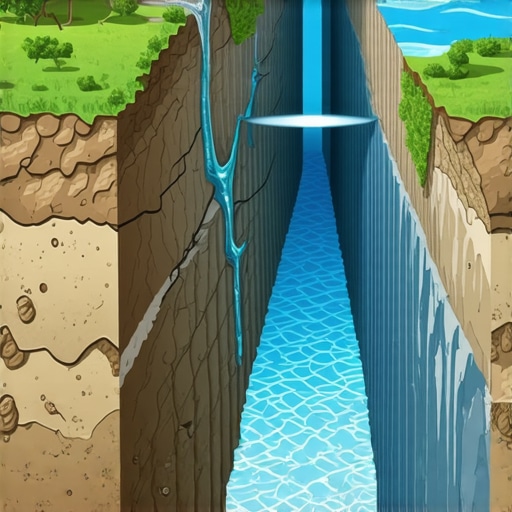
The most common cause of failure in egress window long island projects is what we call the “Bathtub Effect.” Physics dictates that water will always follow the path of least resistance. When a contractor excavates a large hole for an egress window well, they are essentially creating a void in the dense, compacted native soil.
If that native soil is clay-heavy glacial till, it acts like the ceramic walls of a bathtub. When the contractor finishes the egress window installation and backfills the area around the window well, they often use the same soil they dug out, or perhaps a small amount of gravel. However, the backfilled soil is much looser than the surrounding undisturbed clay.
During a heavy rainstorm – like the four record-breaking intense storms we’ve seen across Long Island and Queens in the last four years – the rain falls on your lawn and begins to soak in. The water hits the dense clay layers and can’t go down. Instead, it travels laterally until it hits the “soft” spot: your egress window well excavation. The water pours into the loose backfill, filling the “bathtub.” Because the surrounding clay walls won’t let the water escape, the water level in the well rises rapidly. Eventually, the water reaches the level of the window frame and, under immense pressure, finds its way inside.
This is why understanding The Specific Excavation Depth Required for Long Island Egress Window Installation is so critical. If the hole isn’t deep enough to reach a more porous layer or to accommodate a proper drainage system, you are simply building a private swimming pool right against your foundation wall.
The Role of Hydrostatic Pressure
Many homeowners ask, “If the window is sealed, why does it leak?” The answer lies in hydrostatic pressure. Water is heavy – it weighs approximately 62.4 pounds per cubic foot. When your egress well fills with water due to the Bathtub Effect, that water exerts thousands of pounds of pressure against the window glass, the frame, and the sealant.
No matter how much silicone or flashing a Long Island egress window contractor uses, standard window seals are not designed to be submerged under three feet of standing water. Eventually, the hydrostatic pressure will force water through the smallest microscopic gaps. It can even force water through the seam where the window bucket meets the foundation or through the foundation wall itself.
To combat this, a professional installation must include a way to relieve this pressure. This is where The Foundation Weeping Tile Rule for High-Water Tables comes into play. If your home has an existing footing drain (weeping tile), the egress well must be tied into it. This allows the water that enters the well to be diverted away from the foundation before the pressure can build up to dangerous levels.
Why Standard Quotes Often Miss the Mark
In the world of egress window installation companies, you often get what you pay for. Many “flat-rate” contractors provide quotes that cover the window, the well, and the labor, but they completely ignore the geological reality of the site. They treat every house as if it sits on a bed of perfect sand.
When you are shopping for egress installers, you must look for technical depth in their proposal. A “cheap” quote usually means the contractor plans to backfill with the native clay soil they just dug up. This is a recipe for failure. Native soil compaction is impossible to replicate perfectly, and clay will never provide the drainage necessary for a safe egress.
This is why I always tell homeowners that Why Your Long Island Egress Window Quote Needs a Dedicated Drainage Clause is the most important part of your contract. A dedicated drainage clause ensures that the contractor is committed to installing a vertical drainage pipe that reaches the footings and using the correct materials for backfilling. If a contractor doesn’t mention soil type or drainage strategy, they aren’t the right Long Island egress installation company for a home sitting on glacial till.
Local Context: Lessons from Valley Stream and Queens
We don’t have to look far to see the consequences of poor drainage planning. Recent flooding events in Valley Stream (specifically around Remsen Avenue) and various neighborhoods in Queens have highlighted the vulnerability of basement infrastructure. These areas often deal with a combination of high water tables and low-permeability soils.
During the intense storms of the past few years, we’ve seen basement egress window installation projects that were only months old fail completely. In many of these cases, the egress window company installed the window perfectly according to the manufacturer’s instructions, but they failed to account for the local “micro-geology.” They didn’t realize that in Valley Stream, the soil might stay saturated for days after a storm, maintaining constant hydrostatic pressure on the window. At Construction Edgez, we use these local case studies to refine our methods, ensuring that every egress window long island project we touch is built to withstand the “new normal” of New York weather.
Local Regulations and Safety Standards
Beyond the technical challenges of soil, there are legal and safety requirements that must be met. Some homeowners believe that if they aren’t using their basement as a bedroom, they don’t need to worry about the complexities of egress. This is a dangerous misconception. New York building codes require a secondary means of egress in any finished basement space to ensure that occupants and emergency responders have a way in and out during a fire.
There is a specific Egress Rule for Basements That Don’t Have Bedrooms that dictates the size and accessibility of the window. Furthermore, because an egress window involves cutting into the foundation of your home, it is a structural change that requires a permit. Reputable Long Island egress window installers will always insist on following the proper Understanding Permit Processes for New Building Projects. Skipping the permit process might save a few dollars today, but it can lead to massive headaches when you try to sell your home or file an insurance claim after a flood.
The Solution: How Construction Edgez Prevents Leaks
So, how do we beat the clay-heavy glacial till? At Construction Edgez, we have developed a “Gold Standard” installation process that treats every Long Island egress window installation as a drainage project first and a window project second.
1. Superior Backfill: The 3/4″ Stone Rule
We never backfill with native soil if clay is present. Instead, we use clean 3/4″ drainage stone (gravel). Unlike native soil, 3/4″ stone does not compact into a solid mass. It maintains large “void spaces” between the rocks, allowing water to flow freely to the bottom of the well rather than sitting against the window frame. This is a non-negotiable step for any high-quality egress window installation company.
2. The Vertical Drain Pipe
In clay-heavy areas, we don’t just rely on the stone. We install a vertical drainage pipe (often a 4-inch perforated PVC) that runs from the bottom of the window well down to the home’s footing drains or a dedicated dry well. This provides a direct highway for water to exit the “bathtub” before it can rise. We strictly adhere to The Specific Drainage Rule for Long Island Basement Egress Window Installations to ensure this system is sized correctly for the expected rainfall intensity.
3. Proper Grading and Diverting
The best way to handle water in an egress well is to prevent it from getting there in the first place. We ensure that the final grade of the soil around the window well slopes away from the house. We also advise homeowners on gutter and downspout placement. A downspout discharging water within five feet of an egress window is a recipe for disaster, especially in clay soil.
4. Structural Integrity and Foundation Sealing
Before the window bucket is installed, we treat the cut foundation edges with industrial-grade waterproofing membranes. We don’t just “caulk” the window; we integrate it into the home’s existing vapor barrier and waterproofing system. This holistic approach is why we are considered the premier Long Island egress window contractor.
Conclusion: Engineering Over Installation
A successful egress window is 30% window and 70% drainage engineering. If you live on Long Island, you cannot afford to ignore the soil beneath your feet. Clay-heavy glacial till is a formidable opponent, but it can be managed with the right expertise, the right materials, and a commitment to doing the job correctly the first time.
If you are considering a basement egress window installation, don’t just look for a contractor who can cut a hole in a wall. Look for a specialist who understands the geology of Nassau and Suffolk Counties. At Construction Edgez, Nick Scaldino and his team bring years of experience in foundation repair and basement waterproofing to every egress project. We don’t just install windows; we protect homes.
Stop worrying about the next storm. Contact the expert Long Island egress window installers at Construction Edgez today for a soil-conscious quote and ensure your basement stays safe, legal, and – most importantly – dry.
Ready to secure your basement? Contact Nick Scaldino and the Construction Edgez team today.