The Soil Percolation Rate That Dictates Your Septic Tank Design
The Soil Percolation Rate That Dictates Your Septic Tank Design
Before a single shovel hits the ground for a septic tank installation, the soil must “speak.” In the world of rural construction and land development, we often get caught up in floor plans, kitchen finishes, and architectural aesthetics. However, as an excavation specialist with decades of experience, I – Phil Koski – can tell you that the most critical factor of your build isn’t what happens above the ground, but what happens beneath it. The “Perc Test” (percolation test) is the ultimate gatekeeper of rural construction. It determines whether your property can support a standard waste system or if you are looking at a complex, engineered solution that could cost tens of thousands more. Understanding how soil absorbs water is the first step in ensuring your home remains a sanctuary rather than a plumbing nightmare.
When we talk about septic tank installation, we aren’t just burying a plastic or concrete box. We are designing a miniature, on-site wastewater treatment plant. This system relies entirely on the biological and physical properties of your soil to neutralize pathogens before they reach the groundwater. If your soil doesn’t cooperate, your project doesn’t move forward. In this guide, I will walk you through the technical nuances of soil percolation rates and how they dictate every aspect of your septic system design.
What is a Soil Percolation Test and Why Does it Matter?
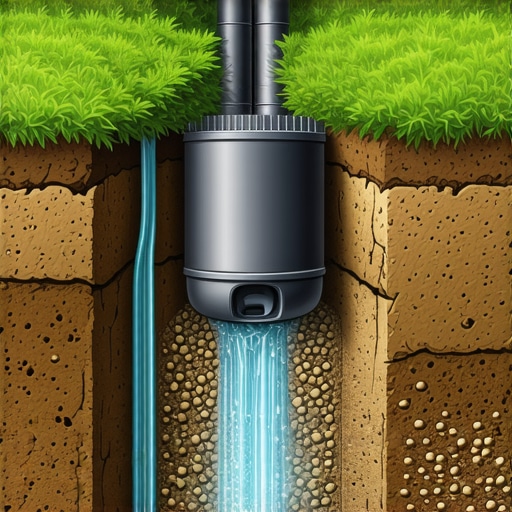
A soil percolation test, commonly known as a “perc test,” is a physical assessment of how quickly a specific patch of land can absorb liquid. In a septic system, the tank itself only handles the primary separation of solids and liquids (scum and sludge). The real work of “cleaning” the water happens in the leach field, or drain field. For this to work, the soil must have the right porosity – enough space between particles to allow water to flow, but enough surface area to filter out contaminants.
The perc test matters because it prevents environmental disasters. If the soil absorbs water too slowly, effluent will back up into your home or pool on the surface of your yard, creating a health hazard. If it absorbs water too quickly (like in very coarse sand), the wastewater might reach the water table before it has been properly filtered by soil microbes. Understanding this balance is a core part of Understanding Permit Processes for New Building Projects. Without a passing perc test, most health departments will simply refuse to issue a building permit.
Mathematically, the test measures how long it takes for the water level in a saturated, pre-dug hole to drop by exactly one inch. This measurement provides the baseline for all subsequent engineering and sizing calculations.
Decoding MPI: The Language of Soil Absorption
In the excavation and septic industry, we measure soil performance in Minutes Per Inch (MPI). This is the universal metric that tells us the “speed” of your dirt. The MPI is inversely related to the size of your drain field: the higher the MPI (meaning the slower the water drains), the larger the drain field must be to handle the daily load of a household.
Soil types vary wildly across the country, and even across a single five-acre lot. Sandy soils often have very low MPIs (e.g., 5 – 10 MPI), which is excellent for drainage but sometimes requires extra care to ensure proper treatment. On the other end of the spectrum, heavy clay or silty soils can have MPIs of 60, 90, or even over 120. When we provide excavation services, we are often looking for that “Goldilocks” zone where the soil is stable enough to build on but porous enough to breathe.
If you have clay-heavy soil, the water particles are so tightly packed that liquid struggles to find a path through. This leads to a high MPI. Conversely, in sandy loam, the “void space” is higher, allowing for a faster percolation rate. It is my job as an expert to interpret these numbers and translate them into a functional site plan that satisfies both the homeowner and the local health inspector.
How Soil Type Dictates Your Septic System Design
Your soil’s MPI doesn’t just tell us how big the field needs to be; it tells us what *kind* of system we have to build. A “failing” or slow perc rate doesn’t necessarily mean you can’t build, but it does mean the end of the “standard” $5,000 to $10,000 gravity-fed system.
The “sweet spot” for a conventional septic system is usually between 15 and 100 MPI. Within this range, we can typically use standard gravel trenches or plastic chambers. However, the specific MPI within that range changes the “loading rate.” For example, for soils with rates between 31 – 45 MPI, the loading rate is often capped at 0.75 gallons per square foot per day. This means if your family produces 450 gallons of waste a day, you need at least 600 square feet of effective absorption area.
When the MPI is too fast (under 5 – 10) or too slow (over 60), we have to get creative. Slow soils often require a “Mound System,” where we bring in specific types of sand to create an artificial drain field above the natural grade. Fast soils might require a “Pre-treatment” or “Aerobic Treatment Unit” (ATU) to clean the water before it hits the ground. Furthermore, you must always account for The Setback Distance Required Between Septic Tanks and Property Lines, which becomes more difficult to manage as the required drain field size increases due to poor soil quality.
The Step-by-Step Professional Perc Test Process
Conducting a perc test is a multi-day commitment. It isn’t as simple as pouring a bucket of water into a hole and watching it disappear. Before we even start the test, we often perform land clearing services to ensure the equipment can reach the designated testing area without damaging surrounding vegetation or compacting the soil where the future field will sit.
- The Deep Hole Observation: Before the perc test, we often dig a 7 – 10 foot deep hole (a “deep hole test”) to check for the seasonal high-water table or restrictive layers like bedrock.
- Digging the Test Holes: We dig several holes in the proposed leach field area, usually 6 to 12 inches in diameter and to the depth of the proposed drainage pipes.
- The Presoak Phase: This is the most crucial step. We fill the holes with water and keep them full for several hours (often overnight). This saturates the surrounding soil, mimicking the conditions of a septic system that has been in use for years. Testing in dry soil would give a false, overly optimistic MPI.
- The Measurement: Once the soil is saturated, we adjust the water level to a specific height and use a float or a ruler to measure how many minutes it takes for the water to drop exactly one inch. We repeat this process until the rate stabilizes.
When the Soil Fails: Options for Slow Percolation
What happens if your MPI exceeds 60 or 90? In many jurisdictions, a rate slower than 60 MPI is considered a “failure” for conventional systems. This is common in states like Nebraska or parts of the Midwest with heavy “gumbo” clay. In these cases, you will need to call in excavation contractors near me who specialize in engineered systems.
One common solution for slow-percing soil is a lagoon system, provided you have enough acreage. Another is the aforementioned mound system, which uses a pump to move effluent up into a raised bed of sand. If you are dealing with an existing system that is failing due to soil compaction or “biomat” buildup, you might require septic drain field repair. This can involve “terracing” the land or using specialized equipment to aerate the soil and restore its natural absorptive capacity. In extreme cases, where the soil is entirely impermeable, we may even look at “drip irrigation” septic designs that slowly disperse treated water over a very large surface area just beneath the grass line.
Cost Implications: How Your Dirt Affects Your Budget
I always tell my clients: “You can’t argue with the dirt.” Your budget for septic tank installation is almost entirely dictated by the MPI. A 3-bedroom home typically requires a leach field between 600 and 1,350 sq ft. If your soil is at 15 MPI, you’re at the bottom end of that scale. If you’re at 55 MPI, your field size – and your gravel and pipe costs – more than double.
Beyond material costs, poor soil requires more labor. For instance, commercial land clearing might be necessary to open up a larger footprint for an engineered field. If the soil is poor, you aren’t just paying for a tank; you’re paying for specialized sand, electric pumps, alarm systems, and potentially a lifetime of higher septic system maintenance costs. For more details on how these variables impact your bottom line, check out my thoughts on Estimating Costs for New Builds: Expert Insights.
Permits and Regulations in 2025/2026
As we move into 2025 and 2026, environmental regulations are becoming stricter. Health departments are increasingly requiring “Level II” soil site evaluations, which go beyond a simple perc test to include a full profile of soil morphology (color, texture, and structure). This is why navigating the bureaucracy is just as important as the physical septic tank replacement or installation.
In many counties, the perc test results must be certified by a licensed sanitarian or a professional engineer. This data is then used to pull the necessary permits. If you are planning an addition to your home, remember that adding a bedroom often triggers a requirement to expand your septic system, which means a new perc test. Staying ahead of these rules is vital, as discussed in Navigating Permit Requirements for Additions in 2025.
Common Pitfalls in Septic System Planning
In my years of providing sewer line repair and excavation, I’ve seen homeowners make the same mistakes repeatedly. The biggest is ignoring the seasonal water table. If you perform your perc test during a record-breaking drought, you might get a “pass” that turns into a “fail” when the spring rains arrive and your leach field becomes a swamp.
Another common error is the “Gravel Driveway Mistake.” Homeowners often drive heavy equipment over the area designated for the leach field during construction. This compacts the soil, destroying the very porosity you measured during the perc test. As I noted in The Gravel Driveway Mistake That Floods Your Neighbor’s Yard, water management is a holistic process. If you crush the soil structure, your emergency sewer line repair bill will arrive much sooner than expected. Always protect your drain field area with temporary fencing and ensure you understand The Soil Compaction Test Every New Build Foundation Needs to avoid structural and drainage failures.
Conclusion
At the end of the day, the soil dictates the design, not the homeowner. Whether you are looking at a simple septic tank replacement or a massive commercial land clearing project for a new subdivision, the Minutes Per Inch (MPI) will be the most important number on your site plan. By understanding your soil percolation rate early in the process, you can budget accurately, choose the right system, and avoid the environmental and financial headaches of a failing drain field.
Don’t leave your project’s foundation to chance. If you’re in the planning stages of a new build or suspect your current system is reaching the end of its life, let’s get a professional evaluation on the books. Let’s connect and discuss how I can help with your next excavation or septic system project! From initial perc testing to final grading, I’m here to ensure your dirt works for you, not against you.